If you are a registered user, please enter your email and password.
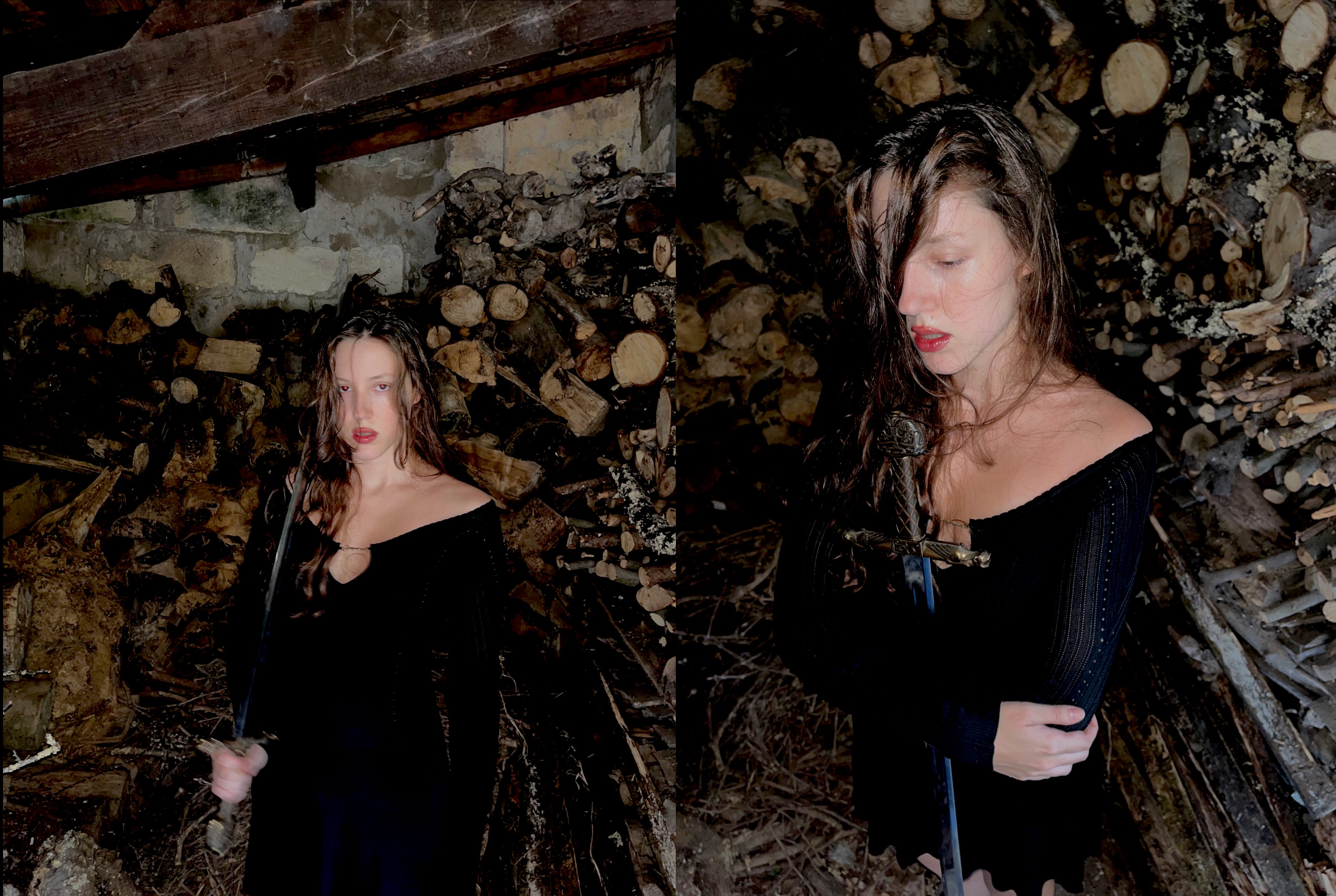
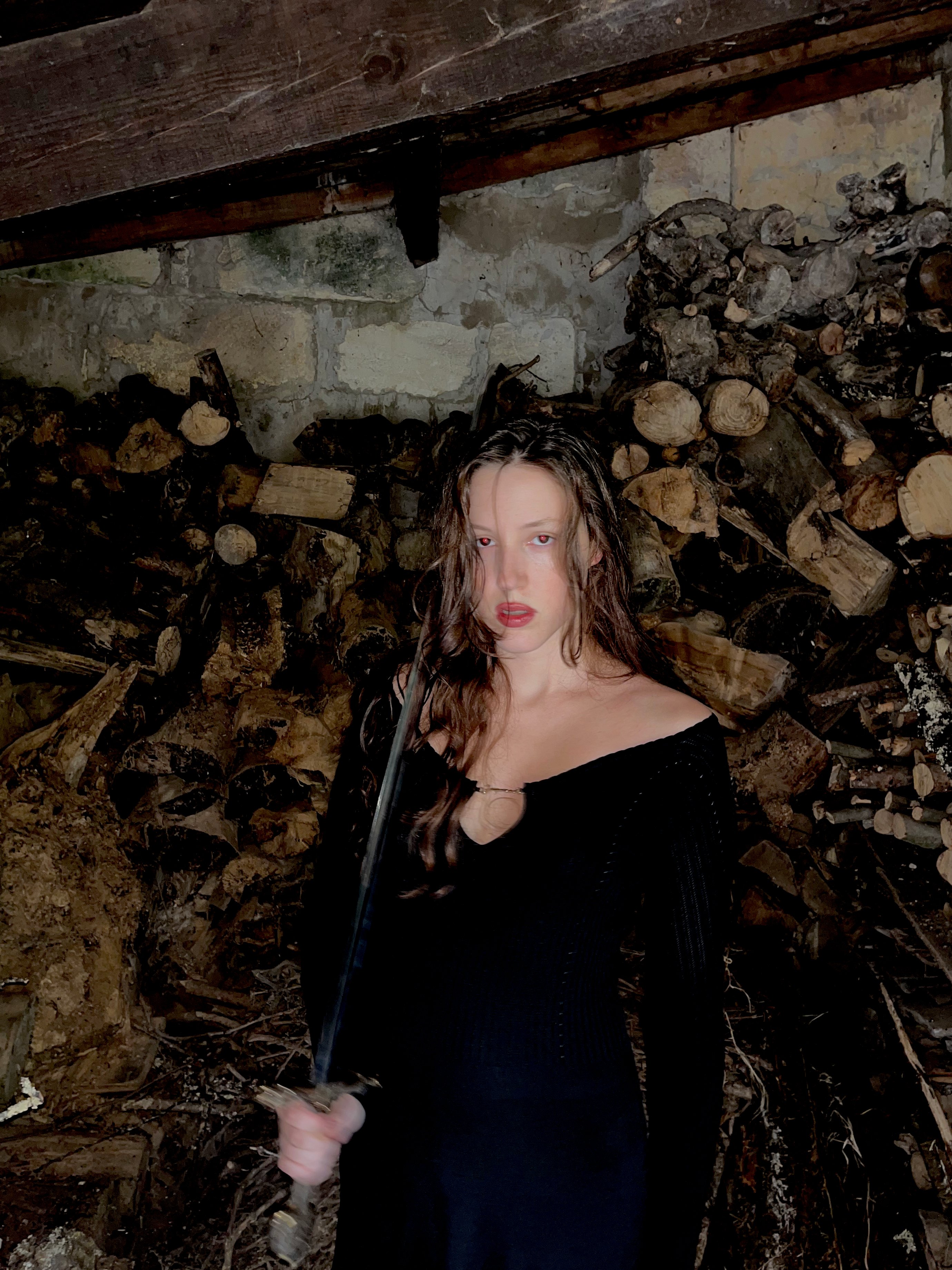
With JACQUEMUS, Aurora bends pastoral codes into something darker, sharper, almost dangerous.
The crimson of her stockings slashes violently through the green, an unexpected cut of colour against the hush of the forest. The little black dress catches fragments of light like a blade, turning softness into edge, intimacy into confrontation.
In her hands, even a sword ceases to be theatrical accessory and becomes extension—an emblem of defiance that sets her apart in the woodland silence.
JACQUEMUS is often understood as playful, Provençal, defined by Mediterranean light and sunlit ease.
With Aurora, he is transformed: no longer carefree or naïve, but tense, mysterious, elemental. She drags the brand away from the warmth of open fields and places it inside a darker narrative—where dusk replaces daylight, where desire is sharpened into power, where simplicity conceals force.
Aurora’s reading is not one of imitation but of reframing. She refuses to let Jacquemus remain in its clichés of pastoral romance and instead twists those codes into something almost mythic. The countryside becomes battleground; the feminine becomes warrior-like; sensuality becomes a kind of authority.
What emerges is a JACQUEMUS that is both recognisable and radically altered: still minimal, still rooted in intimacy, but here charged with urgency, danger, and fire. Through Aurora, the brand’s vocabulary of light dresses and sun-drenched ease is rewritten into dusk and shadow, into movement that carries weight, into gestures that carve space in the forest.

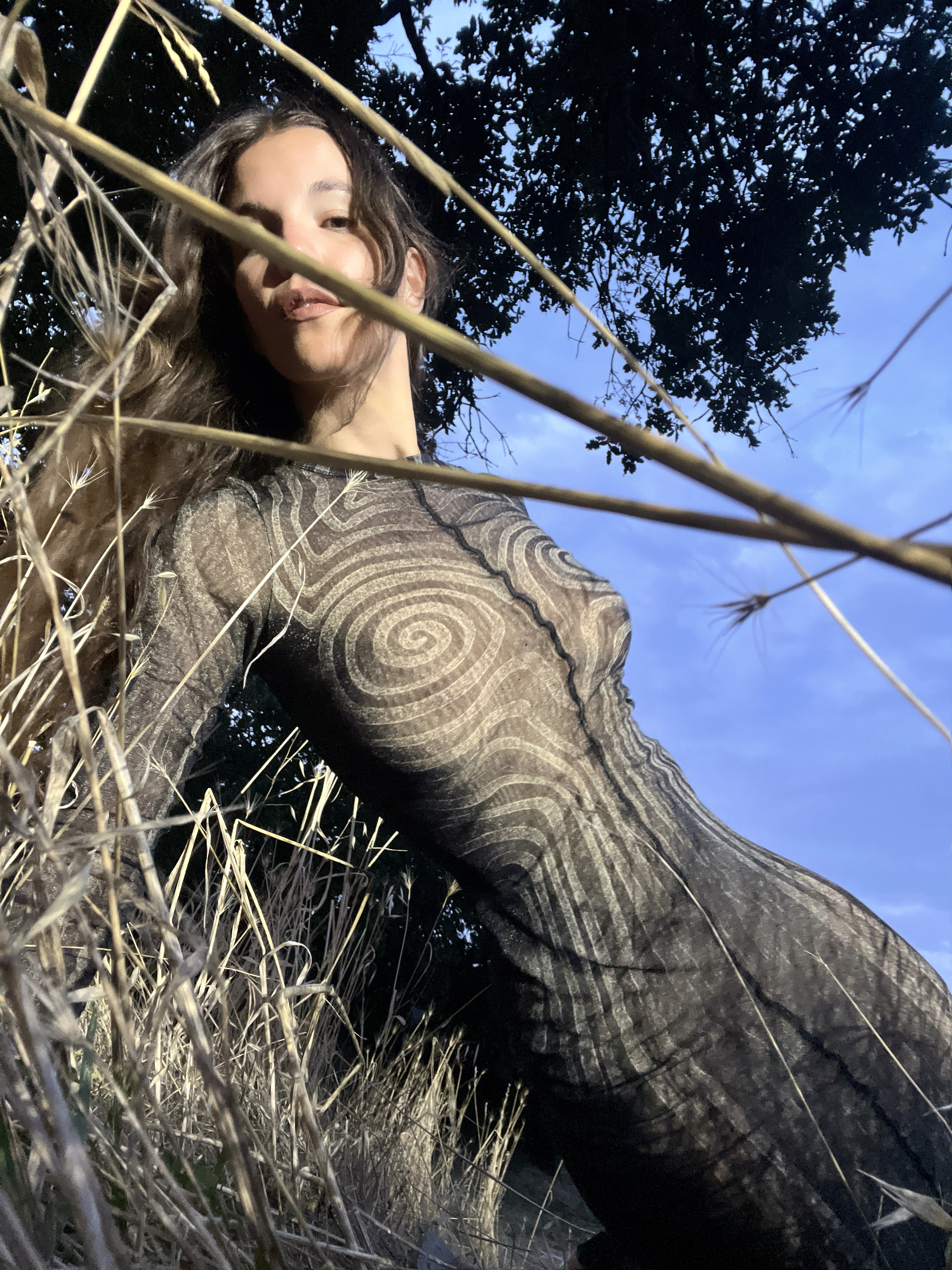
With BURBERRY, Aurora shifts into another register—more solemn, more rooted, almost ceremonial.
If Jacquemus was sharpened into tension and fire, BURBERRY becomes a study in heritage reimagined.
BURBERRY was born of protection, designed for weather and endurance. In Aurora’s interpretation it sheds its urban polish and returns to that origin.
There is a duality in her gesture: she honours the strength of an icon of British fashion, while also subverting it.
Through Aurora, BURBERRY becomes more than classicism. It is ancestral presence: heritage that refuses the archive, stepping instead into shadow and ritual, bark and root.








Do you really want to unsubscribe from our newsletter and not receive The Flamel updates in the future?