If you are a registered user, please enter your email and password.
With Maison Margiela, Lilia inhabits a world of fragments and shadows.
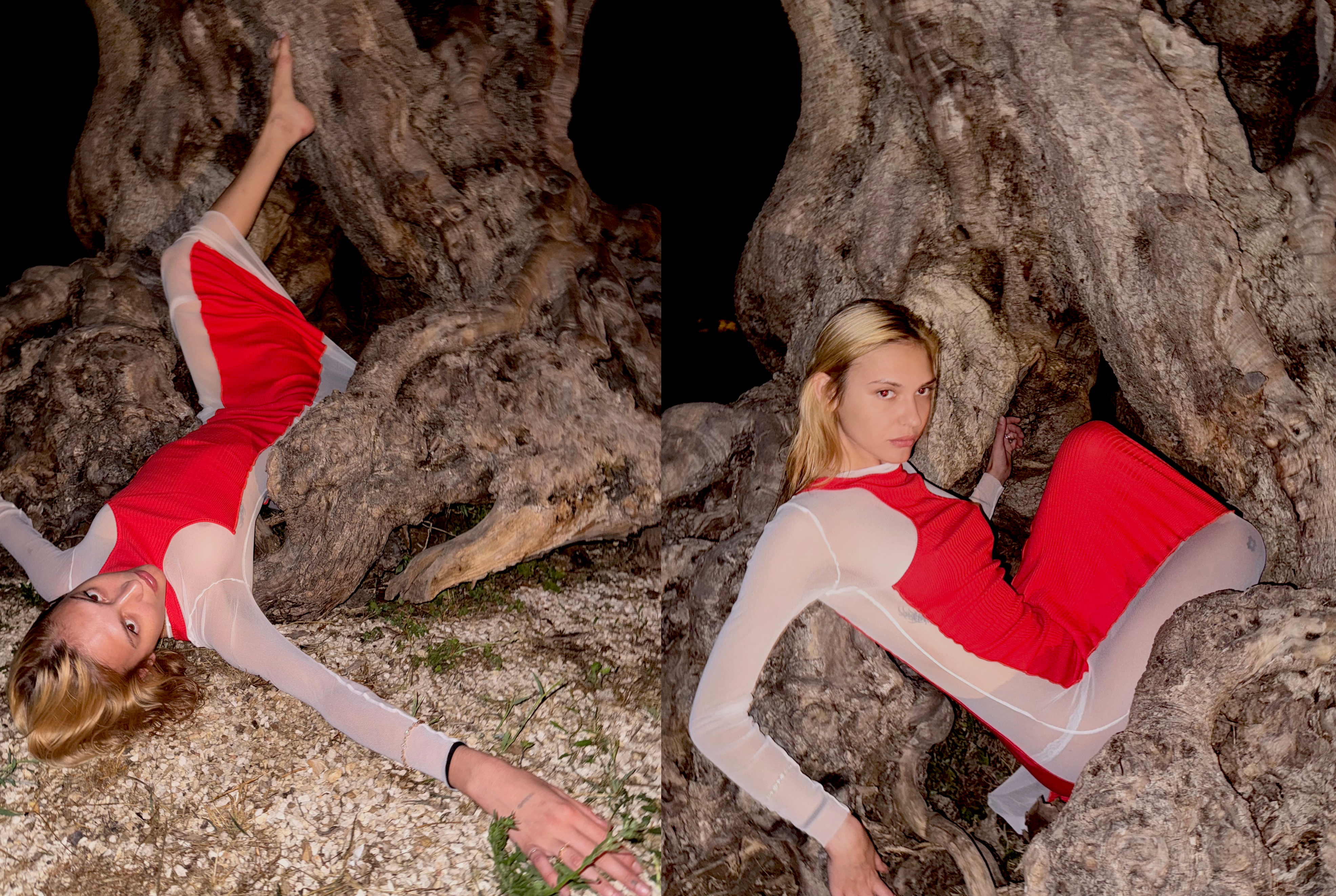
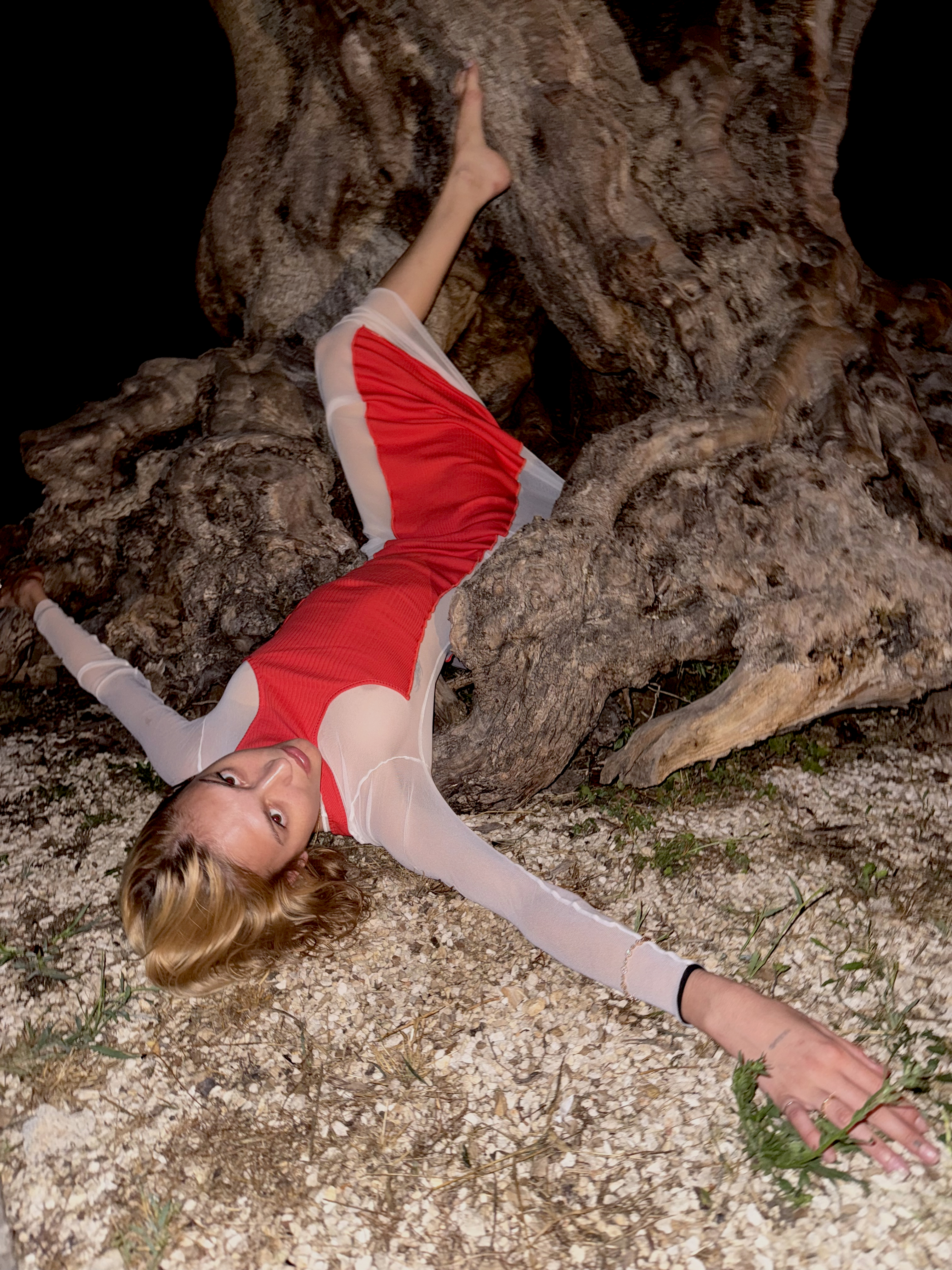
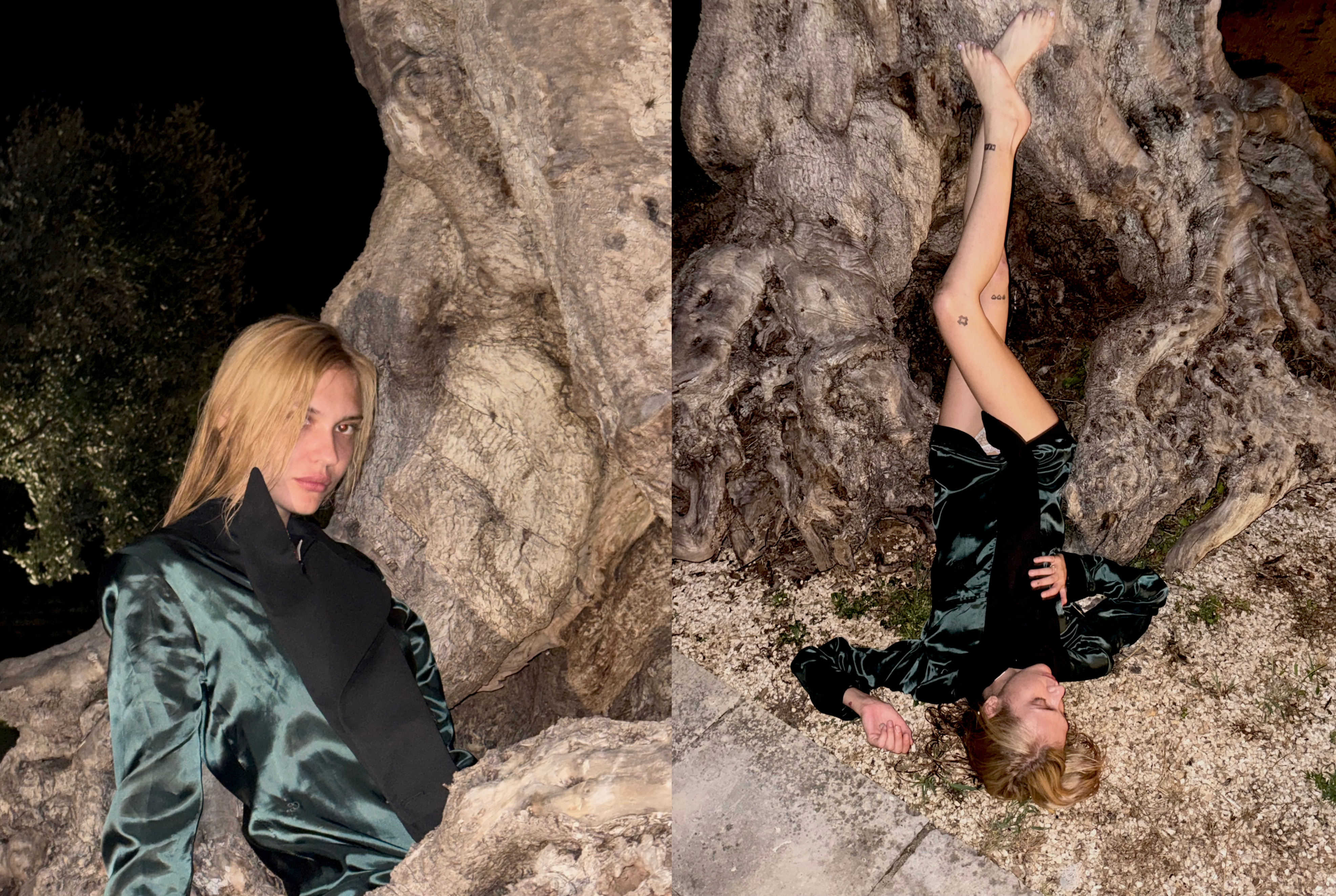
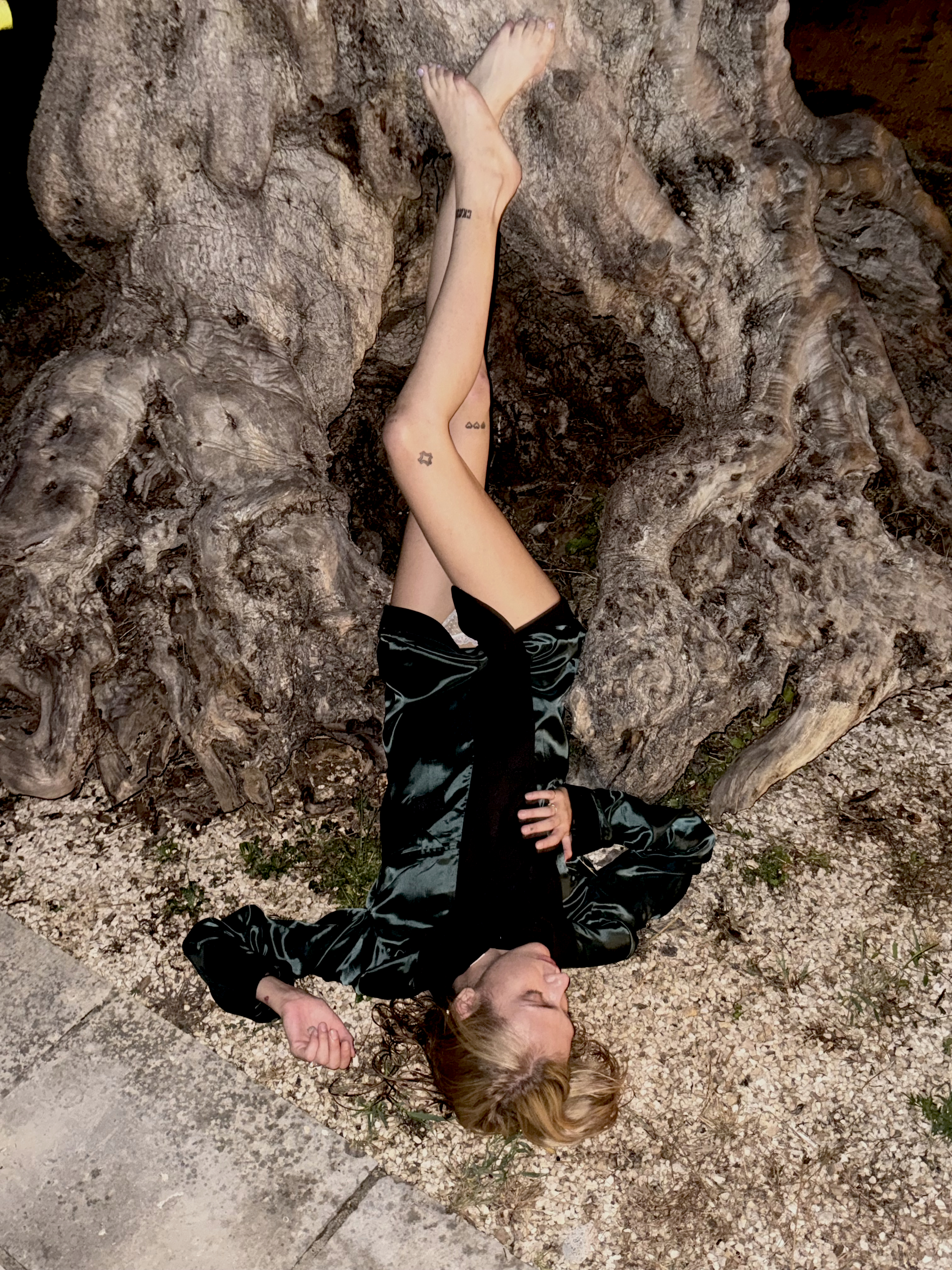
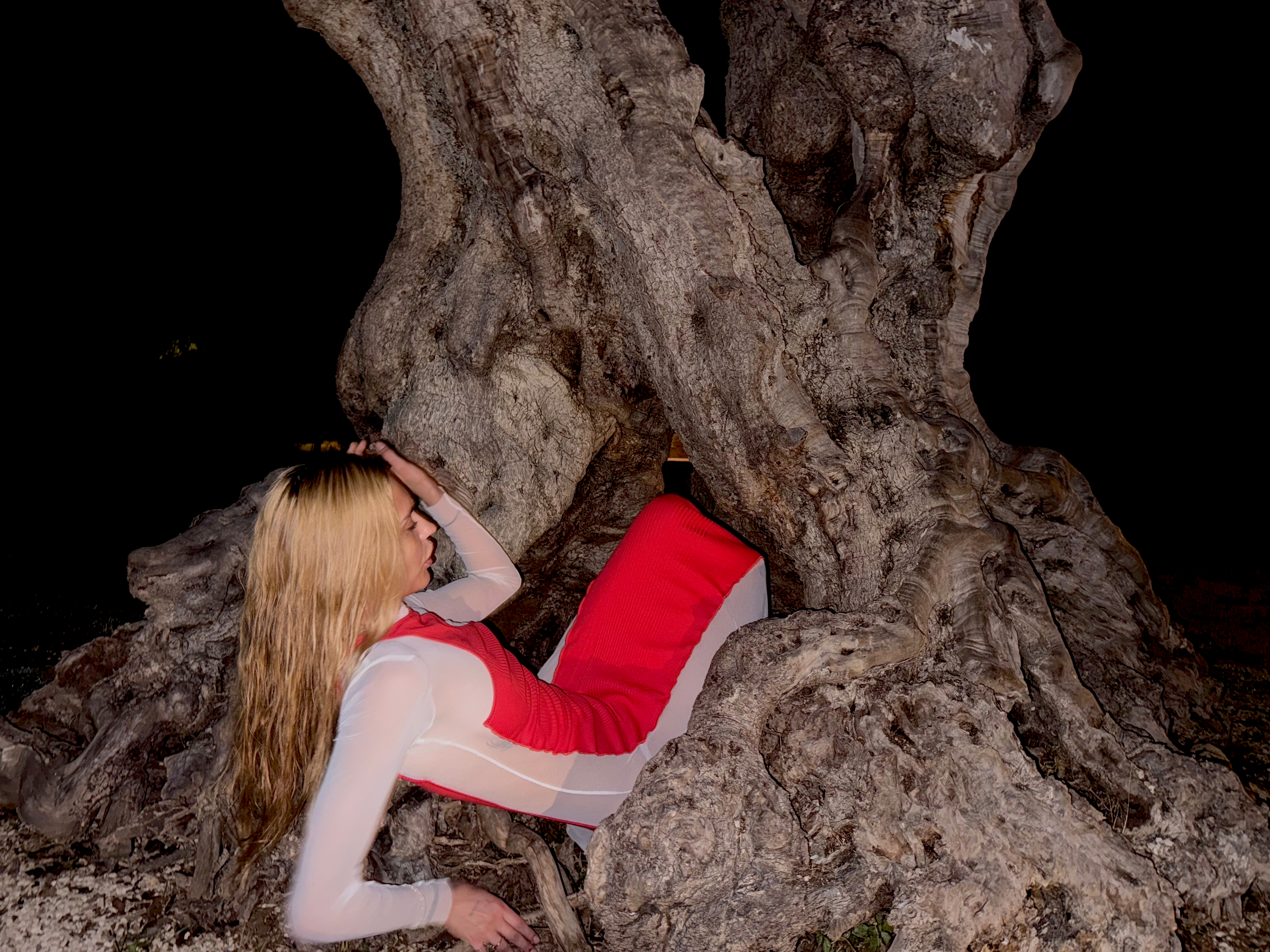
Wearing the Inside-Out Blazer Dress is not a stylistic gesture but a declaration. The jacket, reversed and exposed, reveals what is usually concealed: seams, linings, the raw scaffolding of a garment. It speaks a language of uneasy truths and imperfect beauty—a vocabulary that resonates instinctively with Lilia’s own uncompromising spirit.
Placed within the forest, the message intensifies. The twisted roots and ancient bark mirror Margiela’s deconstruction—surfaces fractured, textures unsettled, structures laid bare.
Lilia does not simply wear the dress; she entwines with her surroundings, blurring body and landscape until the two are indistinguishable.
Here, Margiela ceases to be concept alone. It becomes flesh and grain, gesture and scar, silence and presence.
Her strength lies in the transformation of vulnerability into authority.
The twisted roots and ancient bark mirror Margiela’s deconstruction—surfaces fractured, textures unsettled, structures laid bare. Lilia does not simply wear the dress; she entwines with her surroundings, blurring body and landscape until the two are indistinguishable. Here, Margiela ceases to be concept alone. It becomes flesh and grain, gesture and scar, silence and presence.
Her strength lies in the transformation of vulnerability into authority.
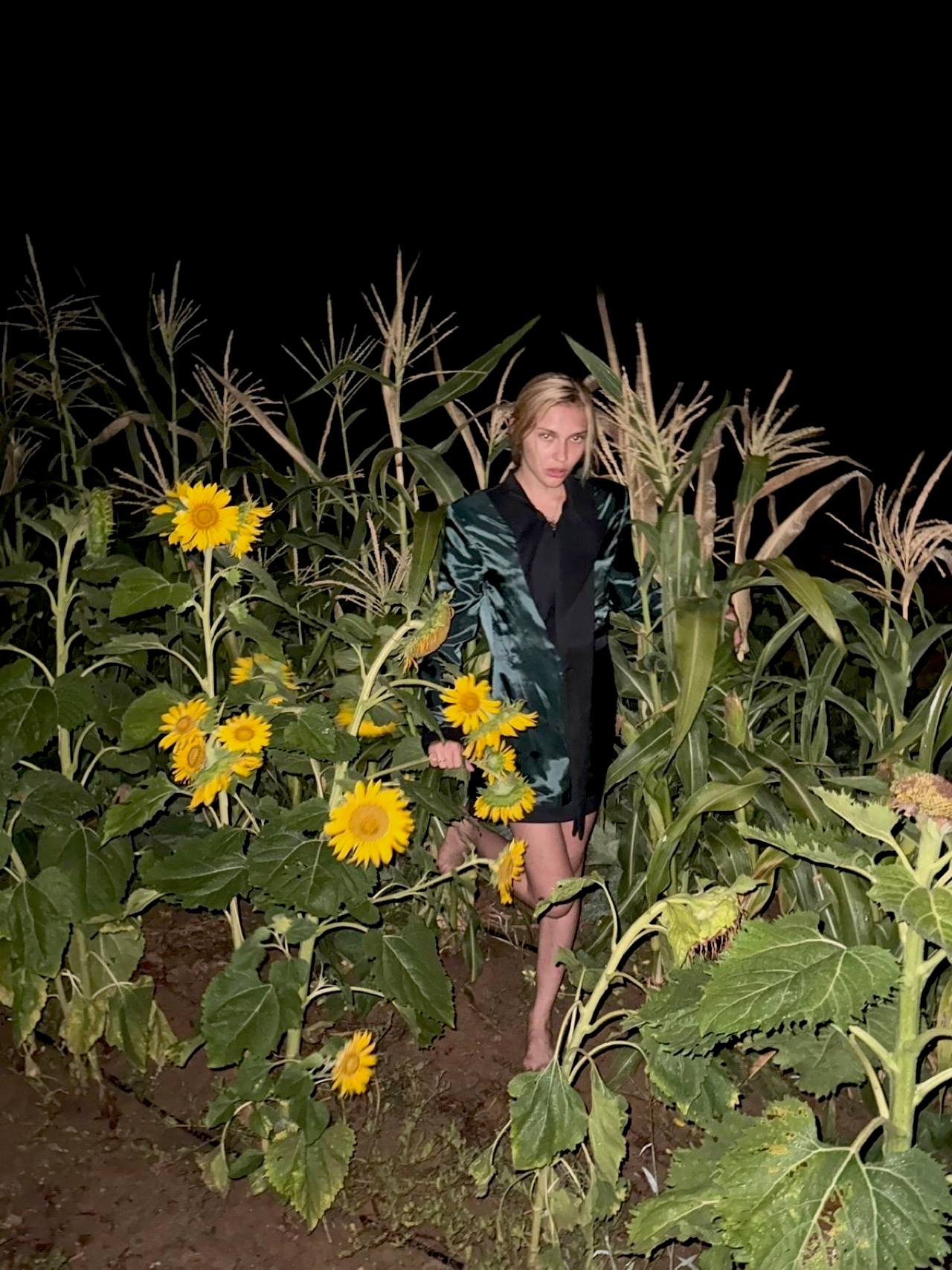
With Jean Paul Gaultier, Lilia channels a spirit of theatre and provocation.
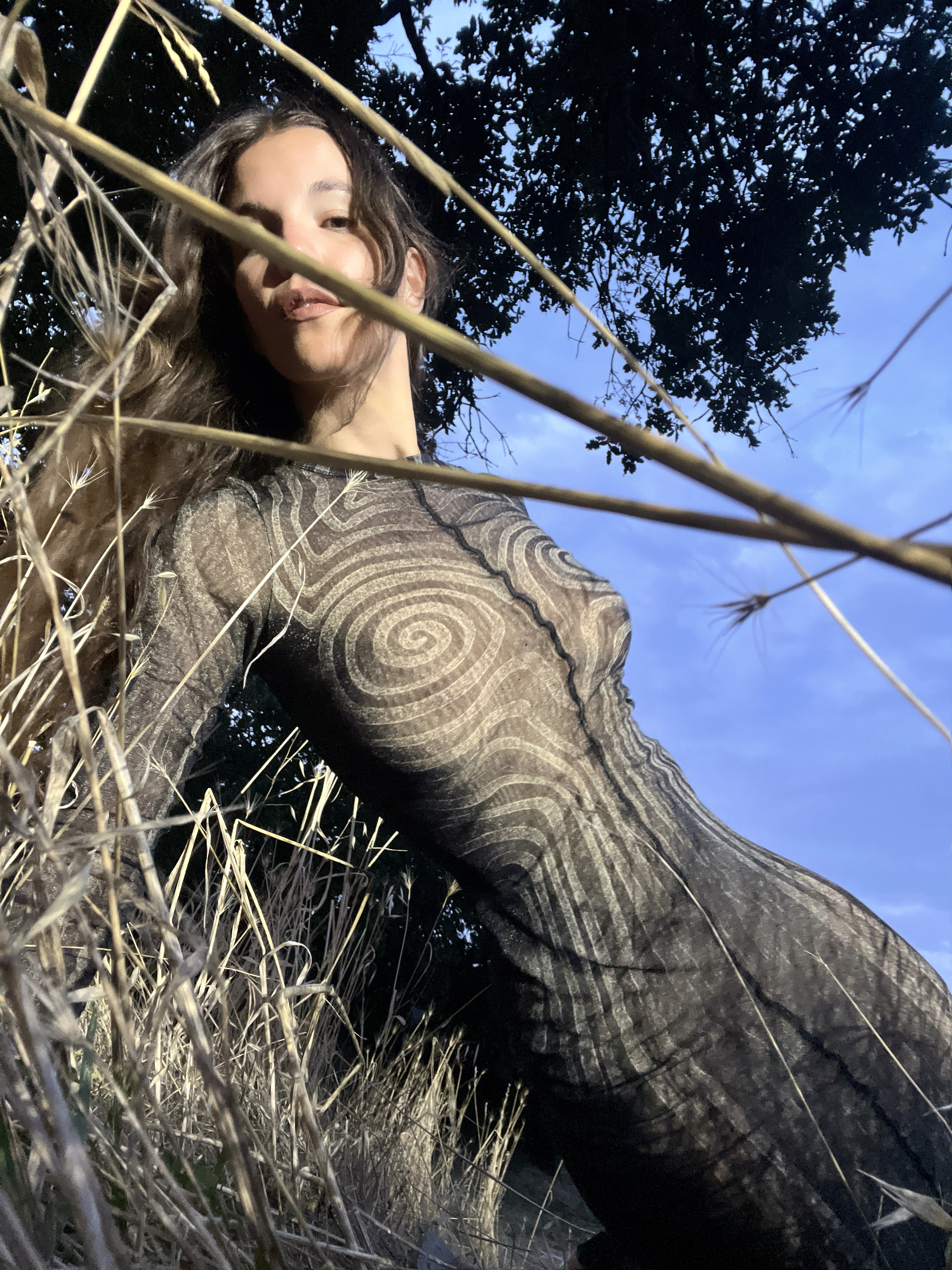
The Petit Grand Maxi Dress is one of his most iconic designs—exaggerated in silhouette yet precise in detail, balancing spectacle with discipline. On Lilia, it becomes more than a garment: it is armour and apparition, an emblem of defiance carried into the forest.
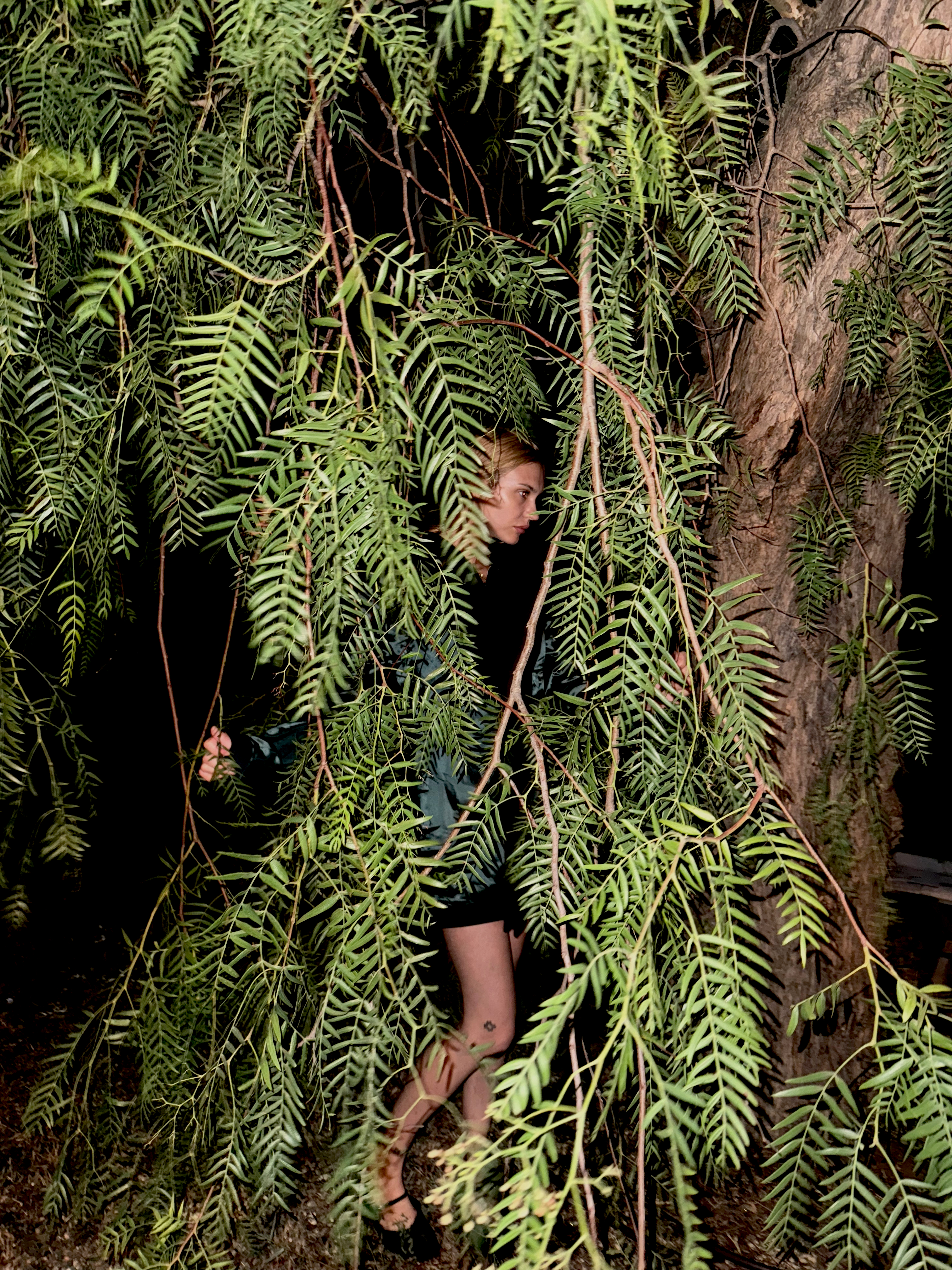
Against the backdrop of roots and shadow, the dress reads differently. Its volumes echo the swell of the landscape, its lines cut sharply against the quiet of the trees. Lilia’s presence heightens this contrast: her stance is uncompromising, her gestures measured yet electric. She turns Gaultier’s drama into something ritualistic, a performance stripped of stage lights and reframed in the hush of woodland dusk.
Gaultier has long drawn power from disruption—twisting codes of femininity, sexuality, and spectacle. In Lilia, these ideas are not simply represented but embodied. She does not mimic the theatrical excess; she carries it, grounding it in the raw textures of earth and bark. The result is a vision where couture is not distant or ornamental, but visceral, immediate, even primal.
Through Lilia, Gaultier’s mythology is renewed. The forest becomes his runway, the silence his score, the muse his fiercest collaborator.

Do you really want to unsubscribe from our newsletter and not receive The Flamel updates in the future?